
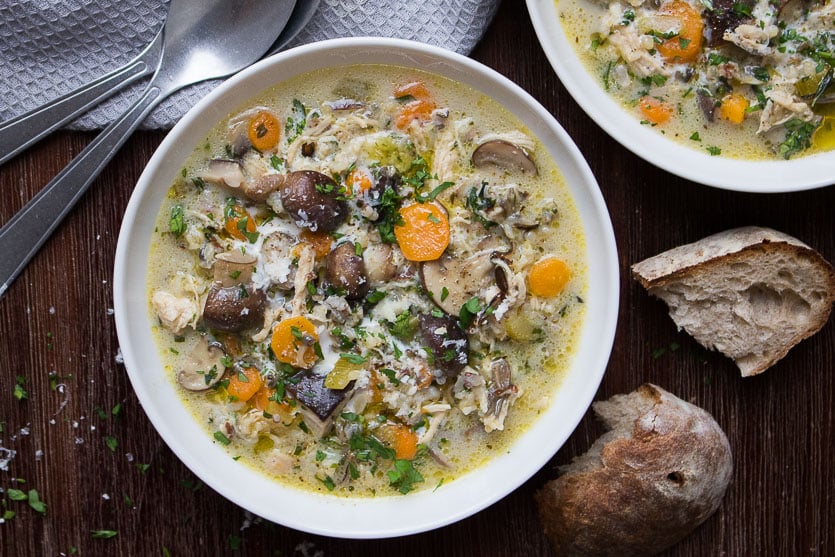
Packed with wild rice, a medley of vegetables, fragrant thyme, and a medley of fresh herbs, this luscious chicken mushroom soup is an ideal choice for comforting your senses on chilly autumn or winter evenings. Moreover, it relies on common pantry ingredients, making it an excellent option for those uncertain dinner nights when inspiration eludes you.
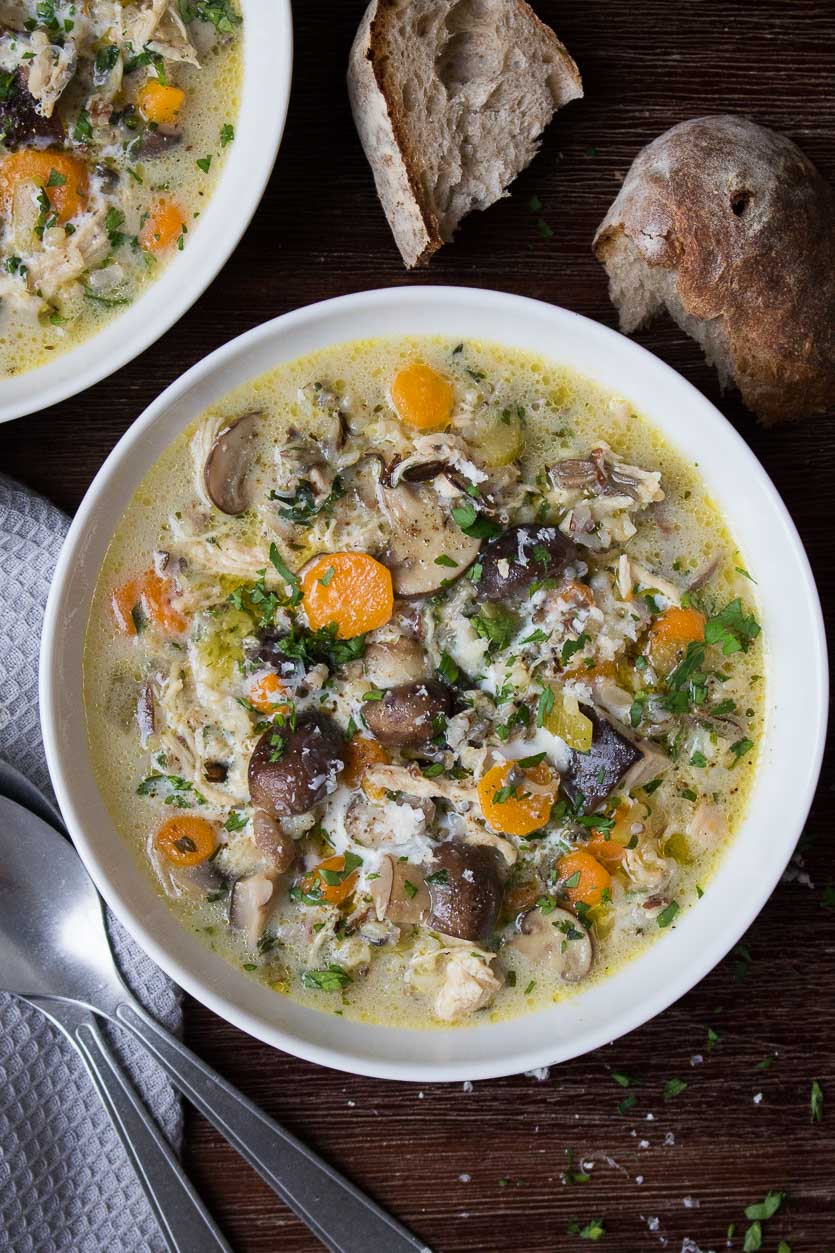
Ingredients:
- Wild Rice: While you can use any type of rice in this soup, I think wild rice pairs best with the mushrooms, chicken, and earthy flavors of this soup. Not to mention, wild rice is a great source of complex carbohydrates and adds some fiber at the same time. If you can’t find wild rice, you can also use a wild rice blend.
- Chicken: This recipe calls for chicken breasts, but any cut of boneless chicken will work well. If you have leftover cooked chicken, you can skip the step of cooking the chicken in the soup and add the leftover shredded chicken once the rice is cooked.
- Mushrooms: For that earthy mushroom flavor.
- Carrots, Onion, and Celery: A classic mirepoix blend creates the base for this soup.
- Garlic and Thyme: For an earthy aroma and taste. Feel free to add a bay leaf or fresh rosemary if you like.
- Chicken Broth: To enhance the chicken flavor. Feel free to use homemade or store-bought chicken broth, both will work very well.
- Milk and Cream: The combination of milk and cream in this recipe gives the soup a rich and creamy texture without being too heavy.
- Parmesan Cheese: A bit of freshly grated parmesan cheese to help thicken and flavor the soup. Pro Tip: Add an old parmesan rind into the pot as the soup cooks and allow it to simmer along with the other ingredients and dissolve into the broth for an ultra-rich taste. If there is any rind left once the soup is cooked, just remove it before serving.
In addition to the above, you’ll also need some cooking essentials in the form of olive oil, butter, salt, black pepper, and a bit of fresh parsley to serve.
Wild Rice vs. Wild Rice Blend
Ironically, wild rice is not rice at all. Wild rice is an aquatic grass with an edible grain, native to North America, that has been long cultivated by Native Americans. Depending on your grocery store, “wild” wild rice may be hard to come by. Most wild rice sold in grocery stores isn’t wild at all, it’s commercially farmed, and because the production of wild rice is difficult, wild rice is more expensive than other rice varieties. For this reason, wild rice is often sold as part of a wild rice blend, along with red rice and brown rice, which helps to make it more affordable.