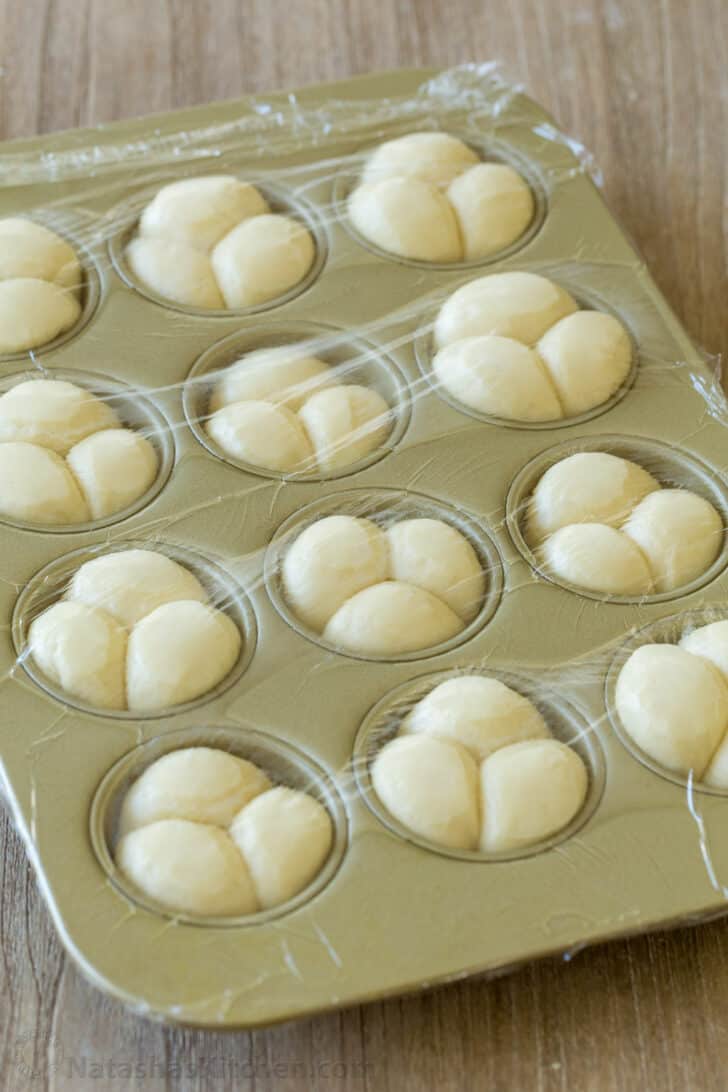
Overnight rolls – Once you have placed the oiled plastic wrap over the pan of dinner rolls, set the pan in the refrigerator overnight. A couple of hours before baking, remove the rolls from the refrigerator, let them come to room temperature and rise until visibly puffed, then butter and bake as directed.
Freezing – Baked dinner rolls freeze really well. Let them cool to room temperature then transfer to a freezer safe zip bag, remove any excess air, and freeze for up to 2 months. If you freeze them the same day they are baked, they will taste fresh when thawed.
Tips for Making the Best Dinner Rolls
Check the yeast – the reason for initially mixing the yeast with 3 Tbsp of warm water is to activate the yeast as well as to make sure it is still working. If you don’t see a foamy layer on your mixture after 7 minutes or so, you should buy new yeast and start over.
Ingredient temperatures – make sure your liquid ingredients are warm when added (between 110-115˚F) for the dough to rise properly. Colder ingredients will take longer to get the yeast working.
Proofing – proof dough in a warm place that is at least 75˚F but not more than 110˚F (high heat will kill your yeast). Putting it in the oven with the light on workswell. Also, you can microwave a damp kitchen towel for a minute then turn it off and place the bowl of dough inside the warm microwave. The warm steamy environment is ideal for dough proofing.
In the bowl of a stand mixer, add 3 Tbsp very warm water (115˚F). Sprinkle the top with 1 packet of yeast, whisk to combine, and let rest uncovered for 7 minutes until foamy on top.
Add warm milk, melted butter, sugar, egg, and salt. Whisk until blended, then gradually whisk in 2 cups of flour then switch to the dough hook attachment and add the remaining 1 1/2 cups of flour in thirds, letting it incorporate with each addition. Add more flour a little bit at a time until the dough feels moist to the touch, but it shouldn’t stick to clean/dry fingertips.
Knead 10 minutes on speed 2 of a stand mixer, or knead by hand. The dough should pull away from the sides of the bowl as it kneads and will be smooth and elastic.
Transfer dough to a large oiled bowl, turning the dough to coat in oil. Cover the bowl with plastic wrap and let rise in a warm place (90-100˚F) for 1 to 1 1/2 hours or until doubled in volume.
Transfer dough to a smooth, clean work surface. You should not need any additional flour at this point. Divide the dough into 12 even pieces then divide each piece of dough into 3 small pieces. Cup your hand over each of the small pieces and roll over work surface to form a ball. Butter a 12-count muffin pan and place 3 little balls of dough into each muffin cup.
Oil a sheet of plastic wrap and place the oiled side loosely over the rolls. Let rest in a warm place for 30-45 minutes until visibly puffed. Meanwhile, preheat the oven to 425˚F with a rack in the center.
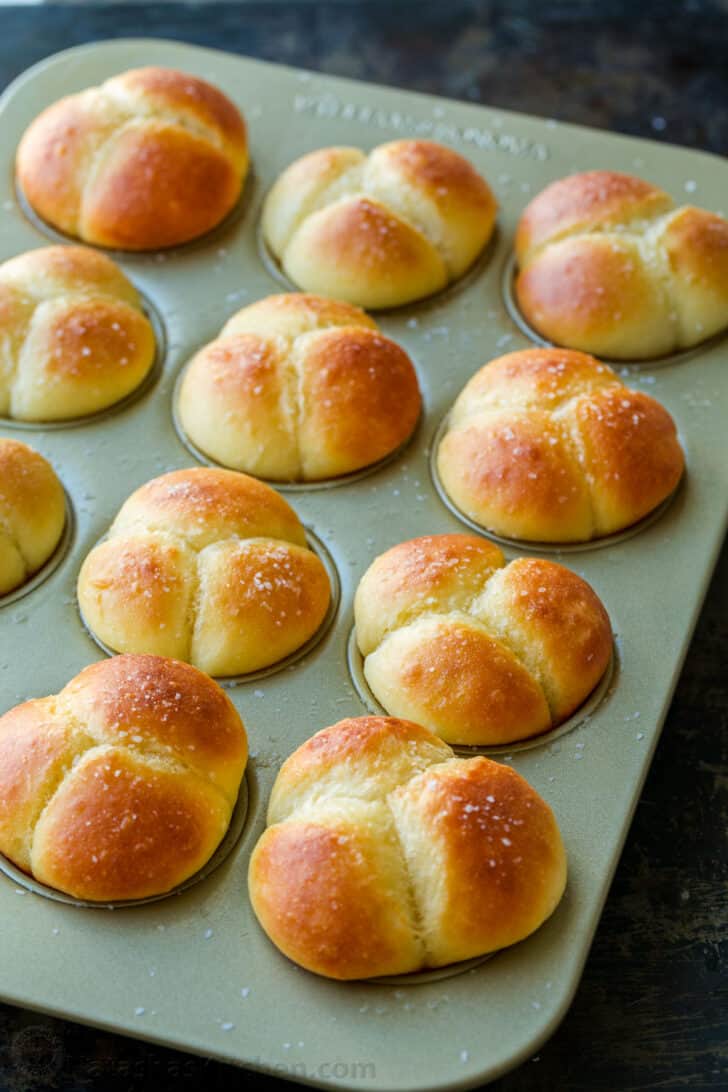
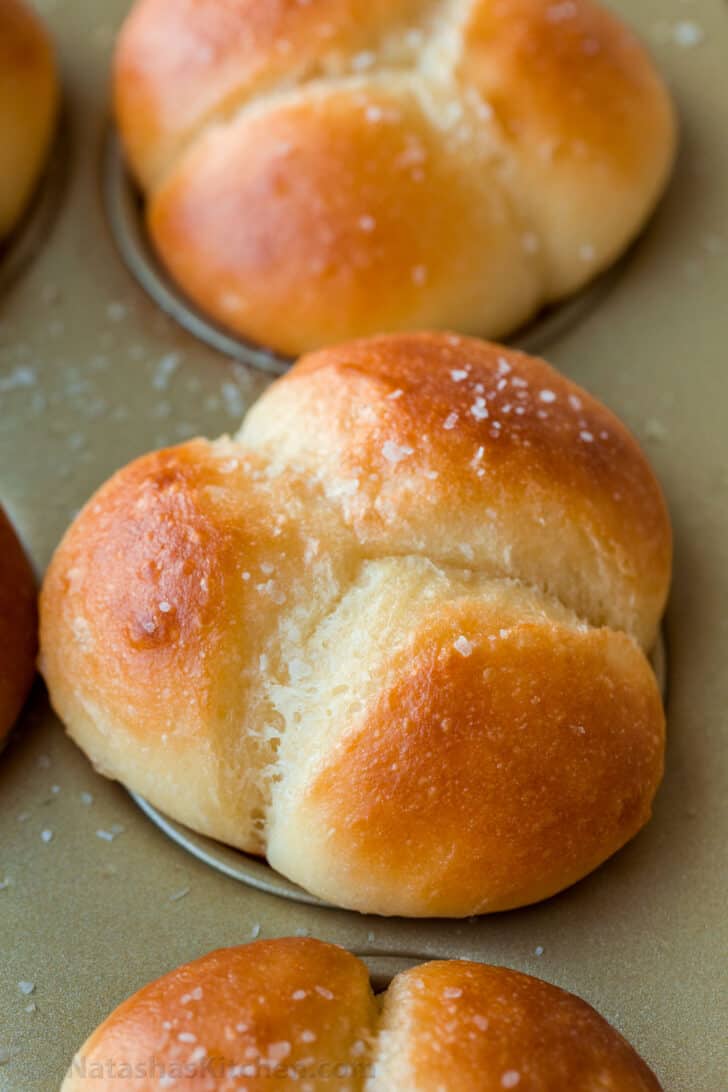
Once rolls have risen, brush the tops with 2 Tbsp melted butter and bake in a preheated oven at 425˚F for 13-15 minutes or until golden brown. As soon as they are out of the oven, brush with more melted butter and sprinkle with kosher salt. Transfer to a wire rack to cool for 15 minutes and serve warm.
3 Simple Dishwashing Hacks to Make Kitchen Chores Easier Ever wondered why dishwashing feels like an endless battle against greasy pans and stubborn food…