
Indeed, canines perceive our messages not only through words but through their nuances. They decipher facial cues, eye movements, vocal tones, body language, and inflections to unravel the tapestry of human communication. Thus, head tilting possibly enhances this process by facilitating better visual contact with our faces. The unique structure of a dog’s head and face sometimes impedes visible range. A quick experiment elucidates: place a fist on your nose and attempt to survey your surroundings. You’ll notice the necessity to pivot to see objects directly ahead. Dogs exhibit similar behavior, tilting their heads to accommodate their obstructing muzzles and achieving an improved visual perspective. This charming tilt, therefore, broadens their field of vision, making it easier for them to discern human facial expressions, thereby enriching the realm of communication.
Consequently, it’s conceivable that breeds with flatter faces, like Bulldogs and Boston Terriers, tilt their heads less due to less intrusive noses. This head-tilting propensity might indeed be an outcome of anatomical configurations, dictated by the alignment of facial and ear bones.
Now, the question of reinforcement arises. The multifaceted orchestration of a dog’s head tilt finds resonance in human responses. Our inherent inclination toward the cuteness of this pose fuels positive reinforcement. When dogs tilt their heads, we respond with affectionate pats, kind words, and affectionate smiles, inadvertently training them to replicate this endearing gesture. Our enthusiastic reactions, in turn, sow the seeds for repetition. The more we shower praise upon the endearing canine head tilt, the more we indulge in its heartwarming charm.
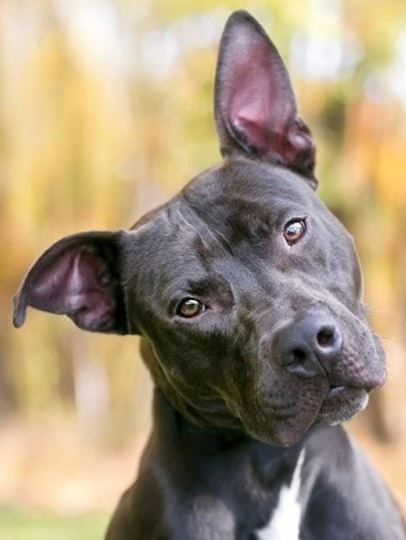
Yet, instances arise where the head tilt takes on a different significance. When it persists beyond communication, it might signal an underlying medical concern. External ear canal infections, spurred by bacteria or yeast, could prompt intermittent head tilting due to discomfort. More gravely, middle ear infections might manifest with sustained head tilting. An enduring tilt might also indicate neurological issues like vestibular disease. When head tilting occurs without auditory cues, seeking veterinary consultation becomes imperative.