
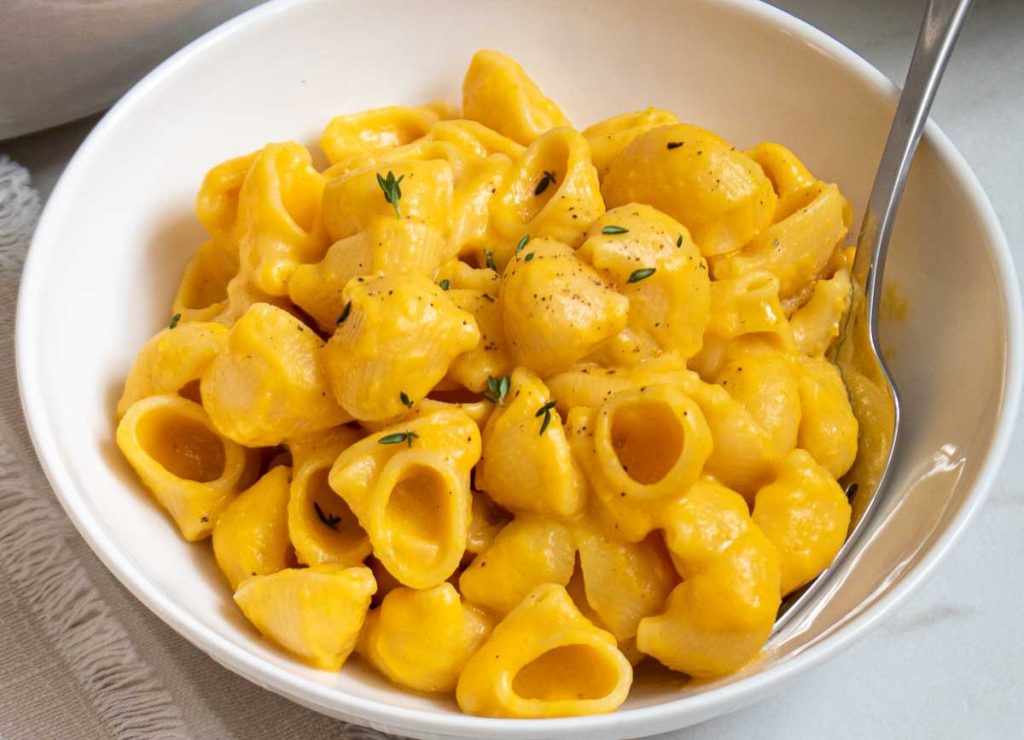
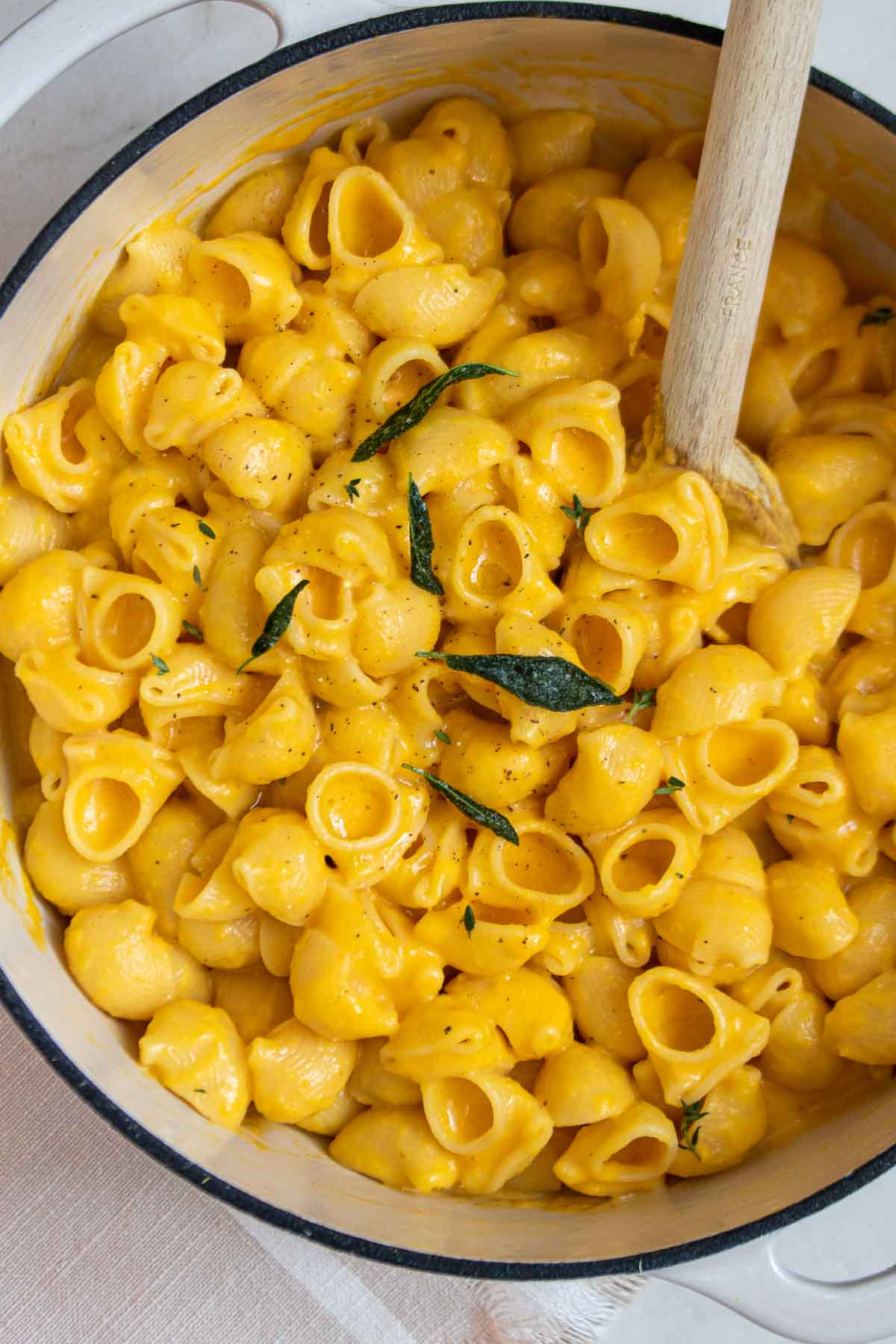
This delightful one-pot butternut squash mac and cheese recipe is not only incredibly easy to prepare but also promises a mouthwatering experience for your taste buds. It’s a creative and healthy way to incorporate more vegetables into your diet. Whether you serve it as the main course or a side dish, this scrumptious dish is destined to become a family favorite, making its way into your roster of wholesome comfort food recipes.
What You’ll Need
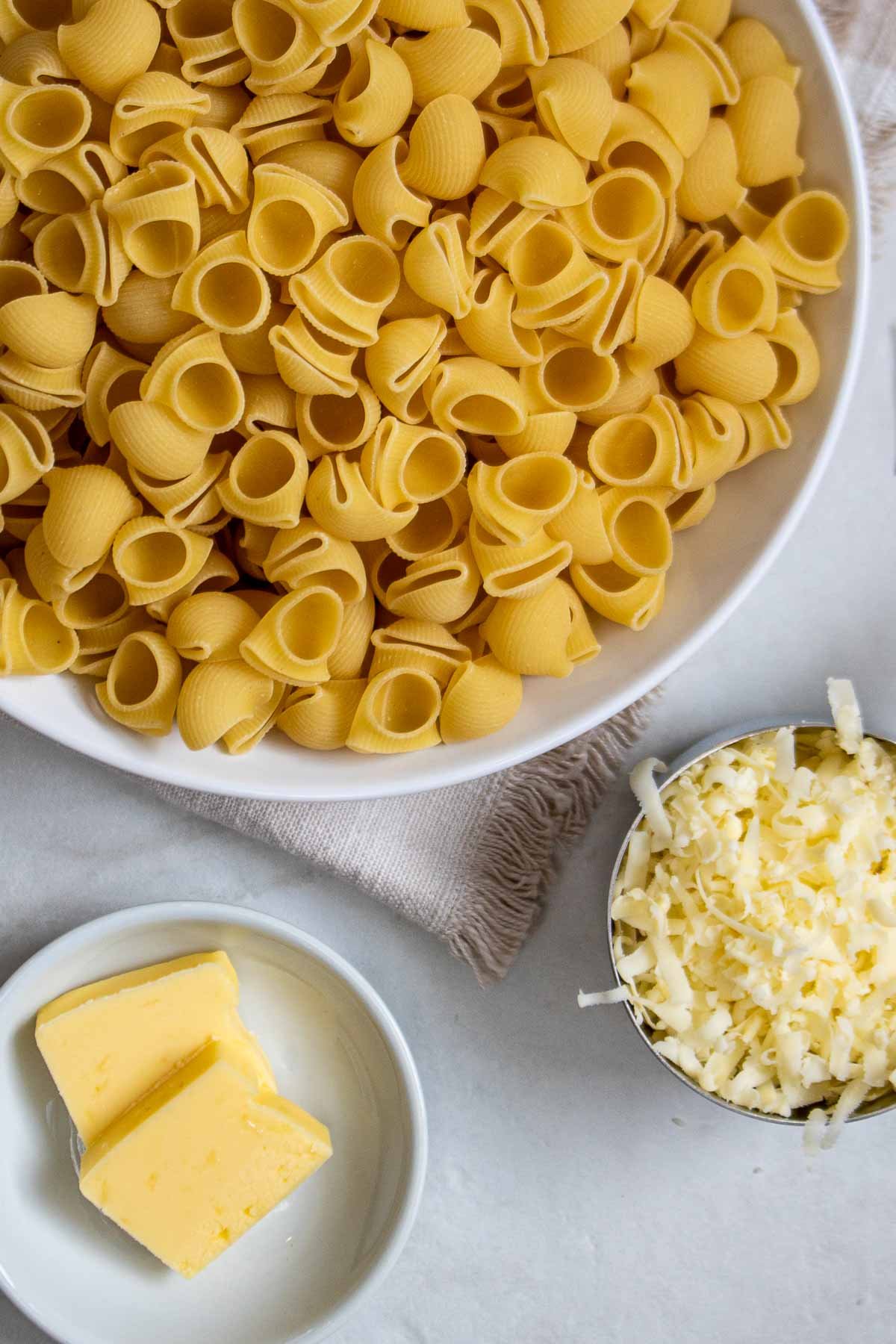
To whip up this fiber-packed mac and cheese, you’ll require the following ingredients:
- Butternut Squash: You can opt for a whole butternut squash and peel and dice it yourself, purchase pre-cubed squash, or use frozen butternut squash (refer to the note below).
- Short-Cut Pasta: Feel free to choose your preferred variety of short-cut pasta, such as gomiti, elbow macaroni, cavatappi, conchiglie, penne, or fusilli. In this recipe, I’ve used pipe rigate, also known as small snail pasta.
- Cheese: For the best texture and flavor, I recommend a combination of sharp cheddar cheese and gruyere. If you can’t find gruyere cheese, simply substitute it with additional cheddar, ensuring you use high-quality cheese, as it takes the spotlight in this mac and cheese.
- Butter: It adds creaminess and is used to fry the sage.
- Milk: Whole milk or 2% milk works best for creating the cheese sauce.
- Onion Powder: Enhances the flavor profile.
- Garlic Powder: Adds an extra layer of flavor.
- Salt: Essential for seasoning.
- Fresh Sage: While optional, fresh sage elevates the flavors and makes for a fantastic garnish.
As an optional flavor enhancer, you can also include a pinch of smoked paprika.
Dietary Adaptions
For a gluten-free version, replace the wheat-based pasta with gluten-free short-cut pasta.
How to Make Butternut Squash Mac and Cheese
Once you’ve gathered your ingredients, follow these steps:
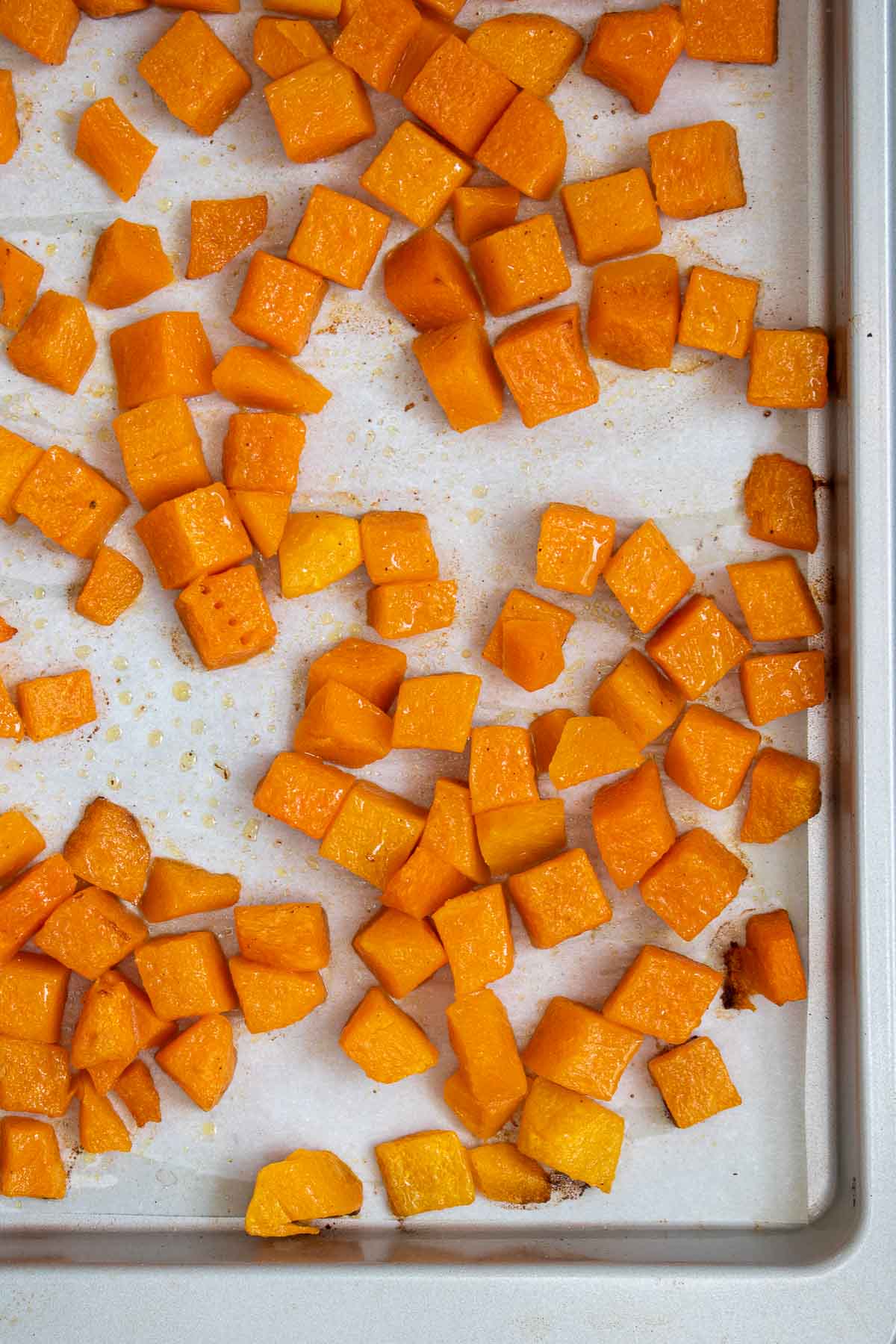
- Roast the squash. Roasting the squash enhances its flavor. (If you prefer a shortcut, you can use canned squash puree.)
- Puree the squash. Blend the squash into a creamy puree.
- Boil the pasta. Cook the pasta to your desired level of doneness; al dente works best in my opinion.
- Fry the sage (optional). While this step is not obligatory, it significantly enhances the dish’s flavors.
- Make the sauce. Combine butter, spices, squash, milk, and cheese to create the quintessential butternut squash cheese sauce.
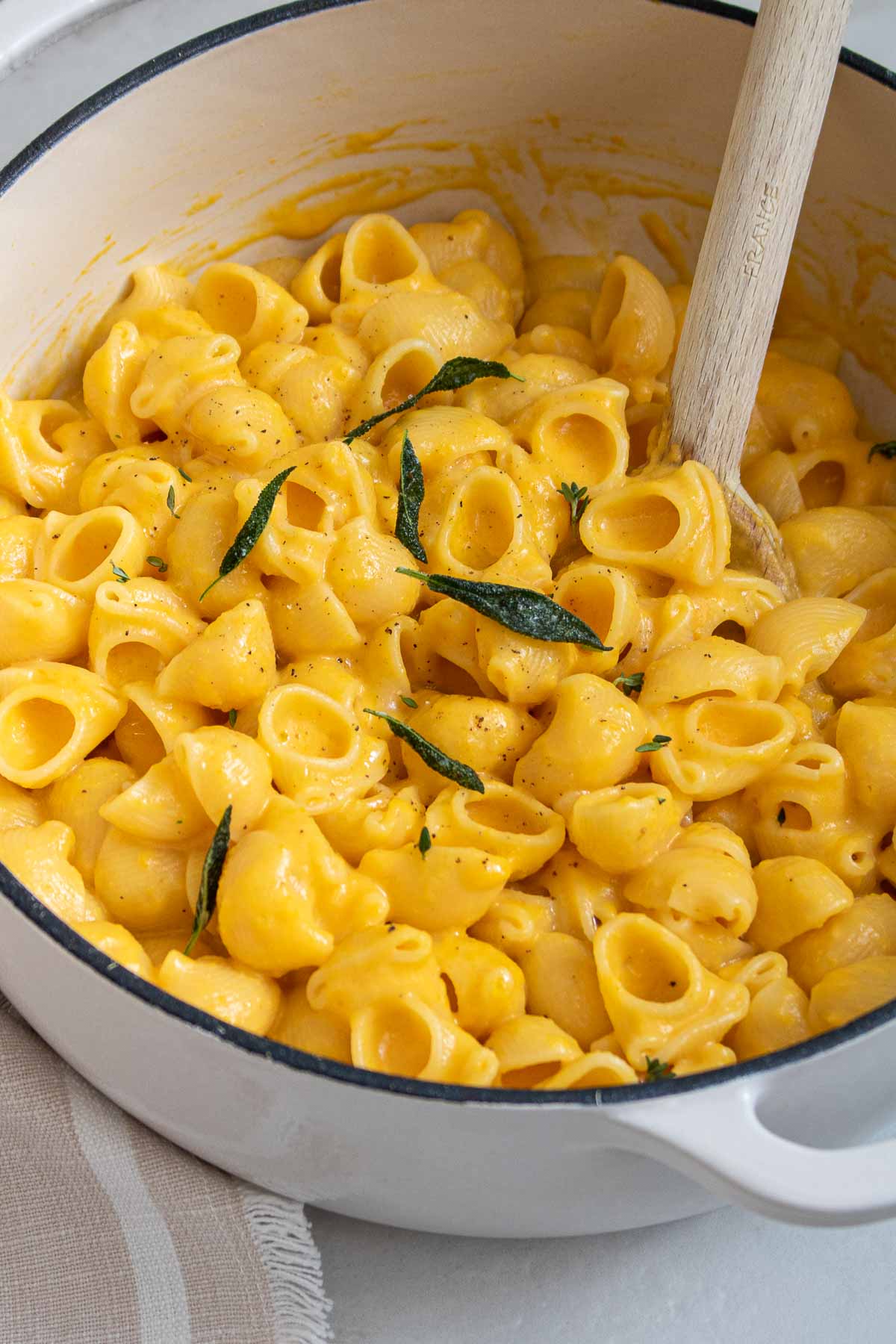
- Mix the pasta and sauce. Once the sauce is ready, gently fold in the pasta until it’s thoroughly combined, resulting in a smooth and creamy texture.
And there you have it! If you fancy breadcrumbs on your mac and cheese (although it’s not my preference), simply transfer the finished dish to a large baking dish, sprinkle breadcrumbs on top, and bake in the oven at 350°F for 10-15 minutes until it turns golden and crispy.
Troubleshooting for Cheese Sauce:
- If your cheese sauce is too thick, you can thin it out with a bit of additional milk.
- If your cheese sauce is too thin, you can thicken it by adding a sprinkle of all-purpose flour.
Nutrition Tip
If you’ve ever thought pasta is an unhealthy choice, think again! Pasta has been a staple across cultures for millennia, offering complex carbohydrates and fiber that can be part of a well-rounded diet alongside proteins, fats, and other essential nutrients.
What Does Butternut Squash Mac n Cheese Taste Like?
Mac and cheese with butternut squash has a flavor profile very close to traditional mac and cheese but with a slightly sweeter and nuttier undertone. While the taste may differ slightly, the texture remains essentially the same.
Is It Better to Boil or Roast Butternut Squash for Mac and Cheese?
Many squash mac and cheese recipes call for boiling the squash to make the sauce, but roasting it imparts significantly more flavor. Although boiling is quicker, you sacrifice some flavor, texture, and nutritional value. The extra time and effort required to roast the squash are well worth the superior flavor it brings to the dish.
Can I Use Frozen Butternut Squash?
Yes, you can use frozen butternut squash. Simply add the frozen squash to the baking sheet and cook it according to the directions. You may need to extend the cooking time by about 5 minutes or until the squash is fully cooked; use a fork to check for doneness and adjust the cooking time as necessary.