

As soon as the lightning struck the Statue of Liberty’s torch, onlookers quickly reached for their phones and cameras, eager to capture the incredible moment. Within minutes, social media platforms were flooded with images of the lightning bolt illuminating the iconic statue. The photographs, showcasing the raw power and beauty of nature, were shared and retweeted thousands of times, spreading the news of this rare event far and wide.
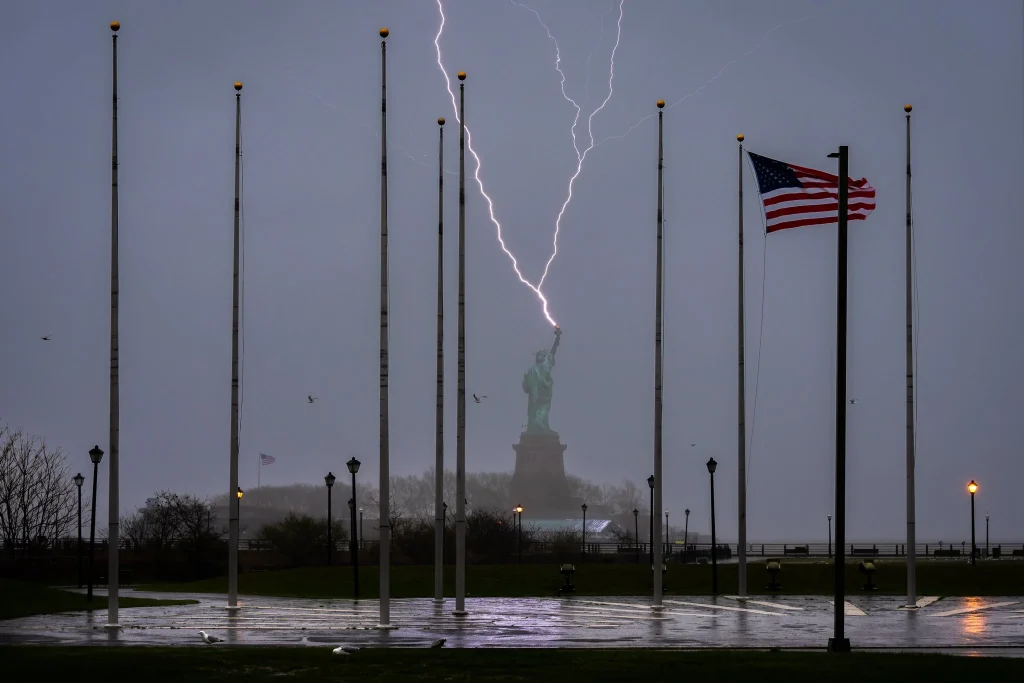
The photographs of the lightning striking the Statue of Liberty quickly went viral, captivating people across the globe. The images spread at an astonishing speed, reaching millions of viewers within hours. People from all corners of the world marveled at the stunning display, sharing their reactions and admiration for the once-in-a-lifetime event. The photographs became a testament to the power of nature and the enduring symbolism of the Statue of Liberty, standing tall and resilient in the face of the storm.
While the sight of lightning striking the Statue of Liberty may seem like a rare occurrence, it happens more frequently than one might expect. In fact, the iconic statue is struck by lightning around ten times per year on average. This high frequency of strikes can be attributed to several factors that make the Statue of Liberty particularly prone to attracting lightning during thunderstorms.
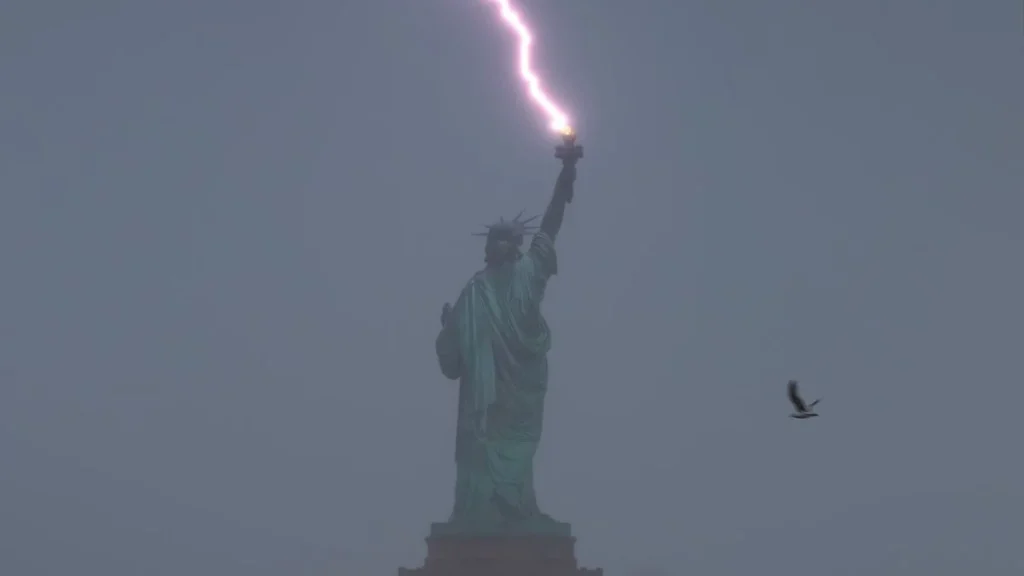
One of the primary reasons for the statue’s susceptibility to lightning strikes is its location. Situated on Liberty Island in the middle of New York Bay, the Statue of Liberty is surrounded by a vast expanse of water. This unique positioning makes it an ideal target for lightning, as the electrical charges in the atmosphere are naturally drawn to the tallest and most isolated structures in the area.