
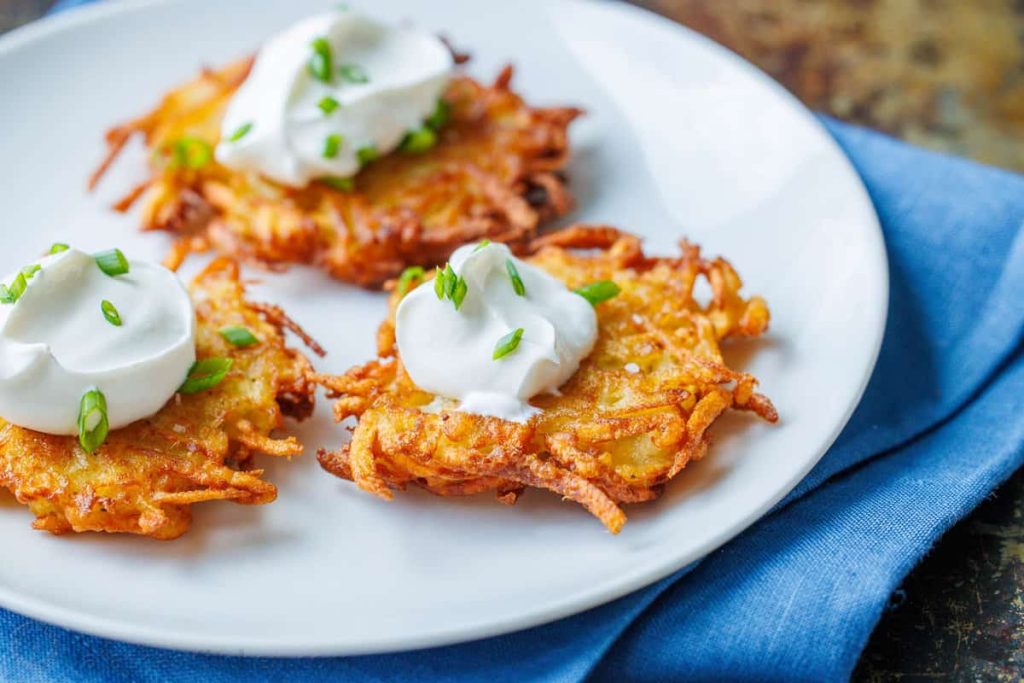
These Classic Potato Latkes offer a delightful contrast of crisp edges and a tender center. When they come off the stove, a sprinkle of salt is the perfect finishing touch. Serve them with a dollop of sour cream and chives, and you have the ultimate comfort food. These latkes are an excellent choice for breakfast, offering a delightful alternative to your usual Breakfast Potatoes.
Latkes are essentially miniature potato Hash Browns, making them a fun and manageable serving size. They are bound together with a touch of egg and flour, which also makes flipping them easier. You have the flexibility to make them larger or smaller, depending on your preference.

We have a deep appreciation for potatoes, relishing them in various dishes like Au Gratin Potatoes, Creamy Mashed Potatoes, and the ever-beloved Roasted Potatoes. If you share our passion for potatoes, this latke recipe is a must-try!
What are Latkes?
Latke, pronounced as “lot-kee,” is a Yiddish term for “pancake.” Latkes are essentially small, shredded potato pancakes fried in oil to achieve a crispy, hash brown-like texture. They are often served with sour cream and chives. In terms of flavor, they are somewhat reminiscent of Ukrainian Deruny, with the key distinction being the use of a star grater, resulting in a more potato puree-like texture rather than grated potato.
Traditionally, Jewish people serve latkes and other oil-fried foods during Hanukkah to symbolize and celebrate the miraculous occurrence of the menorah oil lasting for 8 nights instead of just one. While latkes can be made from a variety of ingredients like zucchini, carrots, beets, or cheese, we prefer the classic potato version. These delectable treats are so tasty that you’ll want to enjoy them all year long.

Ingredients
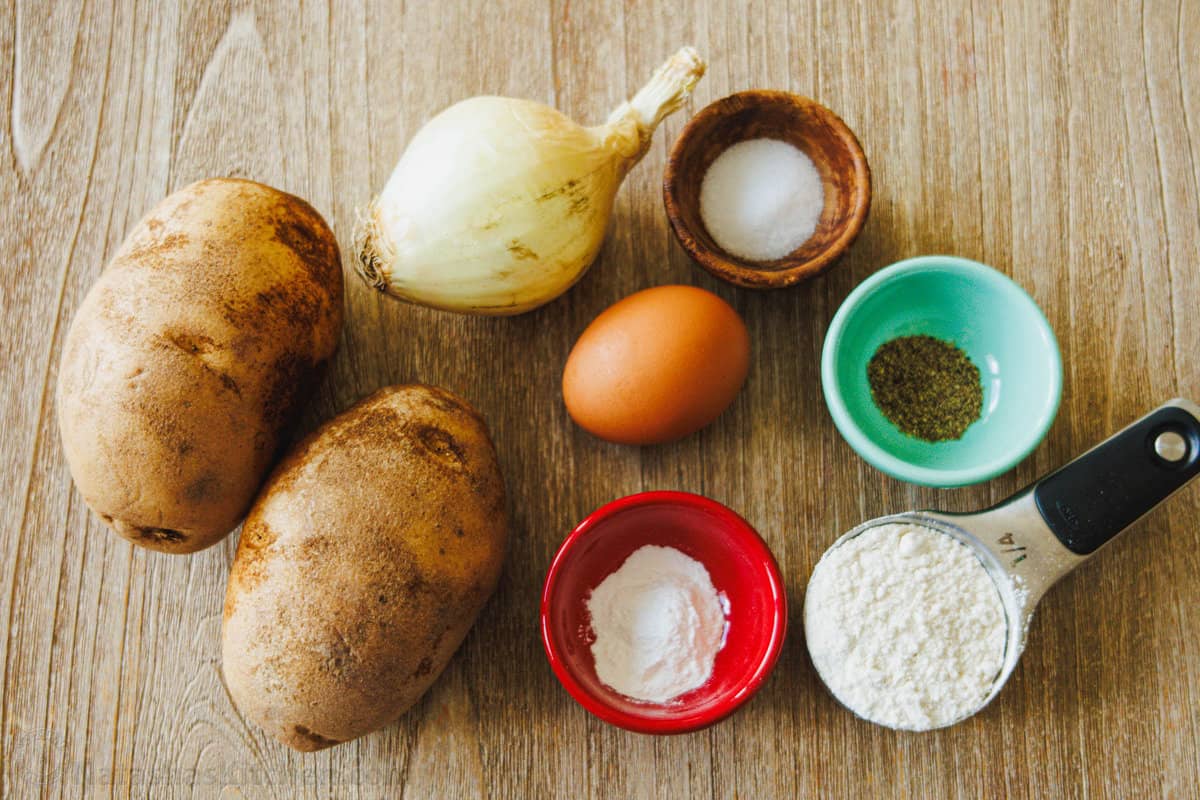
This latke recipe is wonderfully simple to put together, and you likely have most of the ingredients right in your kitchen and pantry.
- Potatoes – You’ll need 1 lb. or 2 large peeled russet potatoes
- Onion – Halved and peeled
- Flour – It binds the batter, adding structure and stability to the pancakes for frying
- Baking powder – A leavening agent that gives your potato latkes a delightful fluffiness and texture
- Salt and pepper – For seasoning
- Egg – Helps bind the potatoes and onion together during frying
- Kosher salt – Sprinkle on top after frying
- Oil – Vegetable oil or extra light olive oil for frying
Pro Tip:
Once the potatoes are grated, they will quickly start to look discolored. This is normal and expected. This oxidation process will not affect the final outcome of the latkes.
How to Make Potato Latkes
- Grate – Grate the potatoes and half of an onion using the large holes on a box grater or in a food processor. Use a dishtowel or cheesecloth to squeeze out excess liquid.
- Prepare batter – In a large mixing bowl, whisk together flour, baking powder, salt, and pepper, and then whisk in the egg. Add in the squeezed dried grated potatoes and stir until the potatoes are evenly coated in the batter.
- Fry – Heat a large, heavy-bottomed skillet over medium-high heat and generously coat the bottom of the pan (about 1/4” of oil). Once the oil shimmers, add the batter to the pan 1 heaping tablespoon at a time. Immediately press with a spatula to form disks. Fry until the edges are browned, 4-5 minutes. Flip and cook for about 3 to 4 minutes more or until the second side is brown.
- Remove – Transfer the latkes in a single layer to a paper-towel-lined plate to absorb the excess oil on the latkes, and sprinkle with kosher salt.
- Continue – Repeat the frying process with the remaining batter, adding more oil to the skillet as needed. Serve warm latkes with sour cream garnished with chives or see additional ideas below.
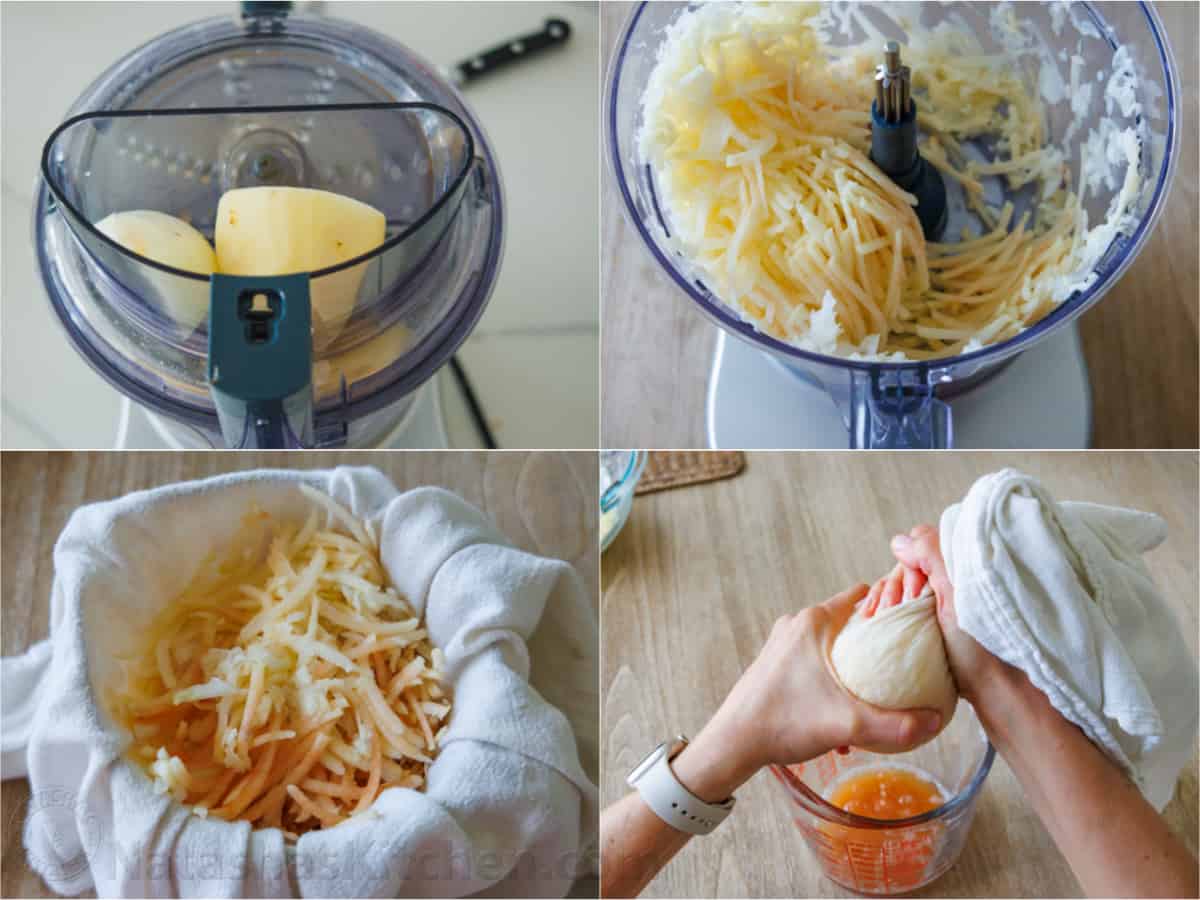
Pro Tip:
Draining potatoes can stain your towel, so avoid using your prized kitchen towels for this task. You can also use a cheesecloth to squeeze out the excess liquid.
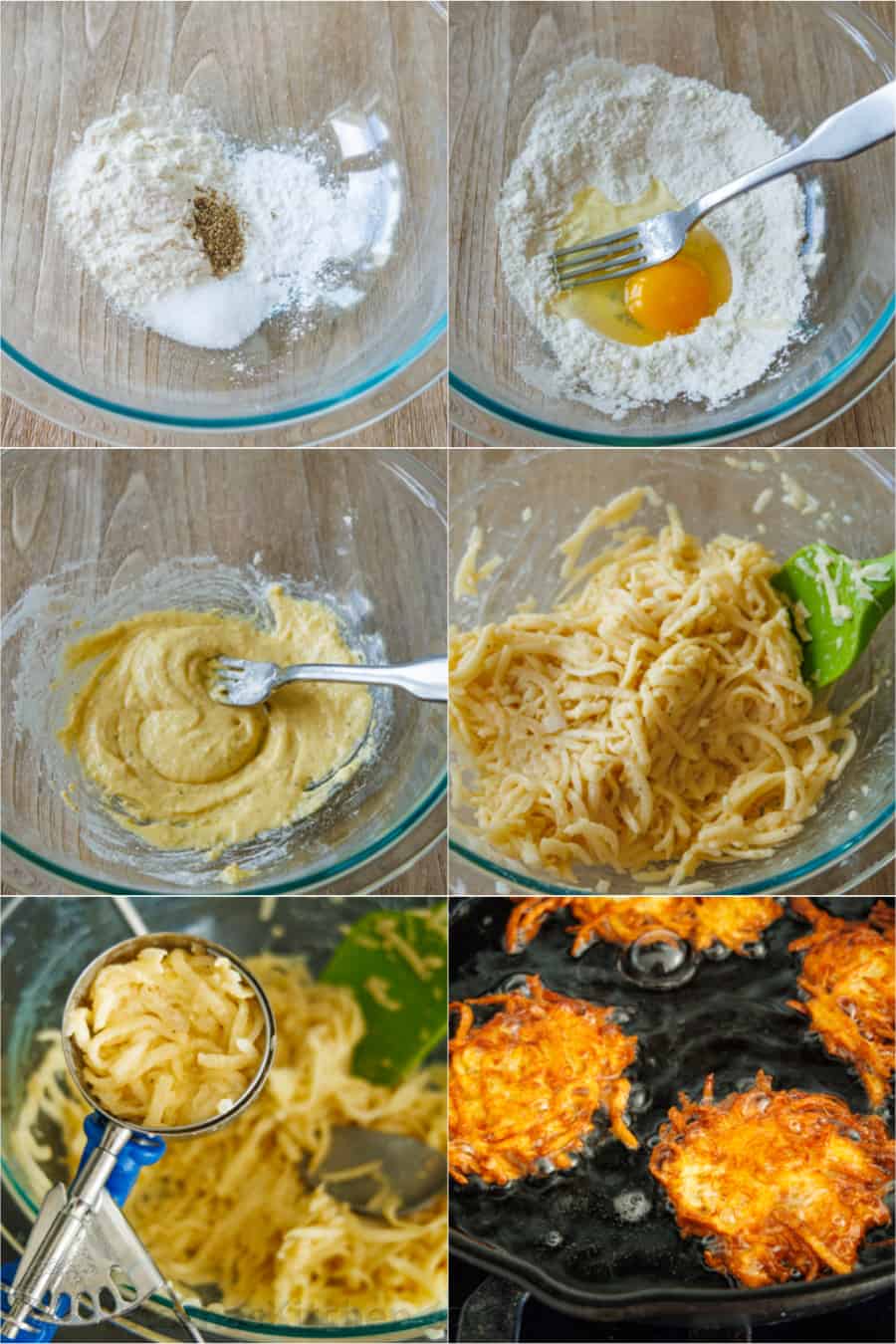
Pressing the latke down in the pan fans out the edges, creating those irresistibly crisp lacy edges. How much you should press the latke down depends on the thickness you prefer. They can be flat and crispy or thicker and softer. Flatter latkes cook through faster while thicker ones take longer.
Pro Tip:
Common Questions
What are the best potatoes for latkes?