

Nevertheless, an alternative theory posits that the iceberg collision was not the sole harbinger of the Titanic’s tragic destiny. David Smith, in his thought-provoking book, “The Titanic’s Mummy,” proposes that a fire, raging in one of the coal bunkers for ten days prior to departure, played a pivotal role in the ship’s demise. Smith suggests that this fire, if not properly extinguished by removing the burning coal and directing it into the furnace, weakened the area of impact, thereby compromising the structural integrity of the hull and critical bulkhead.
While some theories claim that attempts to douse the fire by shoveling burning coals into the engine furnaces propelled the ship at full speed into the path of the iceberg, disregarding the ice warnings, others refute this notion. Speculation arises that the fire, rather than hastening the collision, may have inadvertently extended the ship’s lifespan during the sinking.
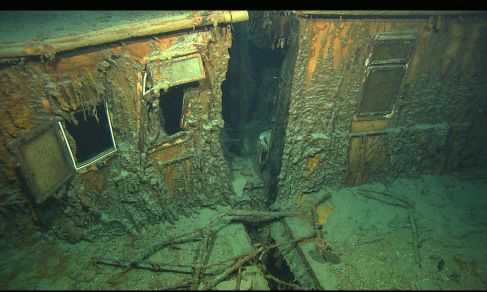
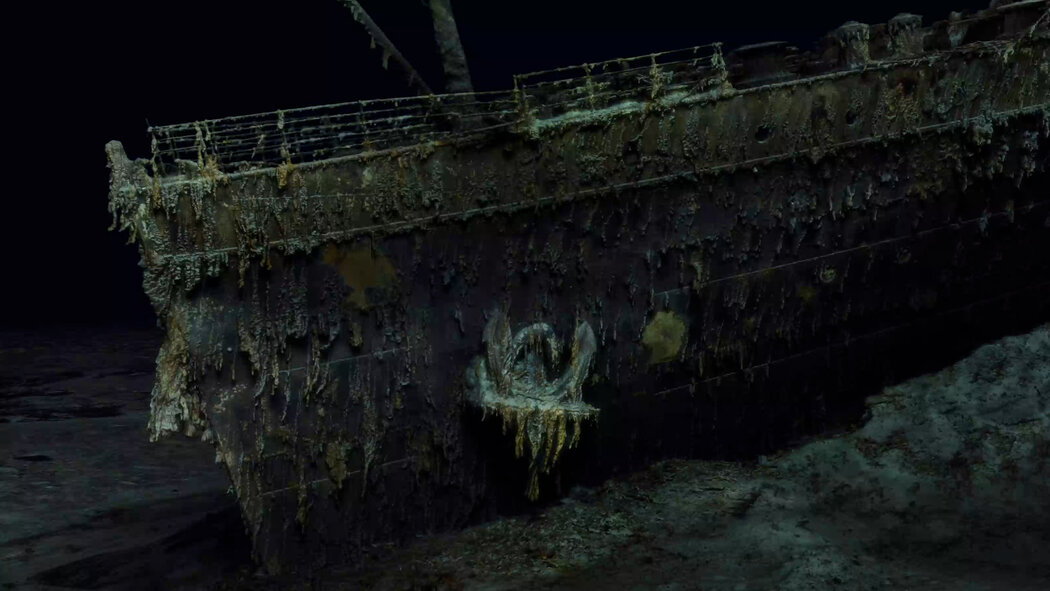
Recently, captivating 3D images of the Titanic’s wreckage have been unveiled, providing unprecedented insights into that fateful night. Magellan, a British deep-sea mapping company, meticulously captured the shipwreck, resting 3,800 meters deep in the North Atlantic Ocean. These technological advancements allow us to observe the gradual decay of the ship, a victim of iron-eating bacteria, salt corrosion, and the relentless forces of the deep ocean.
Among the haunting artifacts discovered within the vessel lie 2,500 champagne glasses, 45,000 napkins, and 50,000 towels. Astonishing photographs reveal dusty, unopened bottles of champagne that would have filled these very glasses, forever preserved in time.